
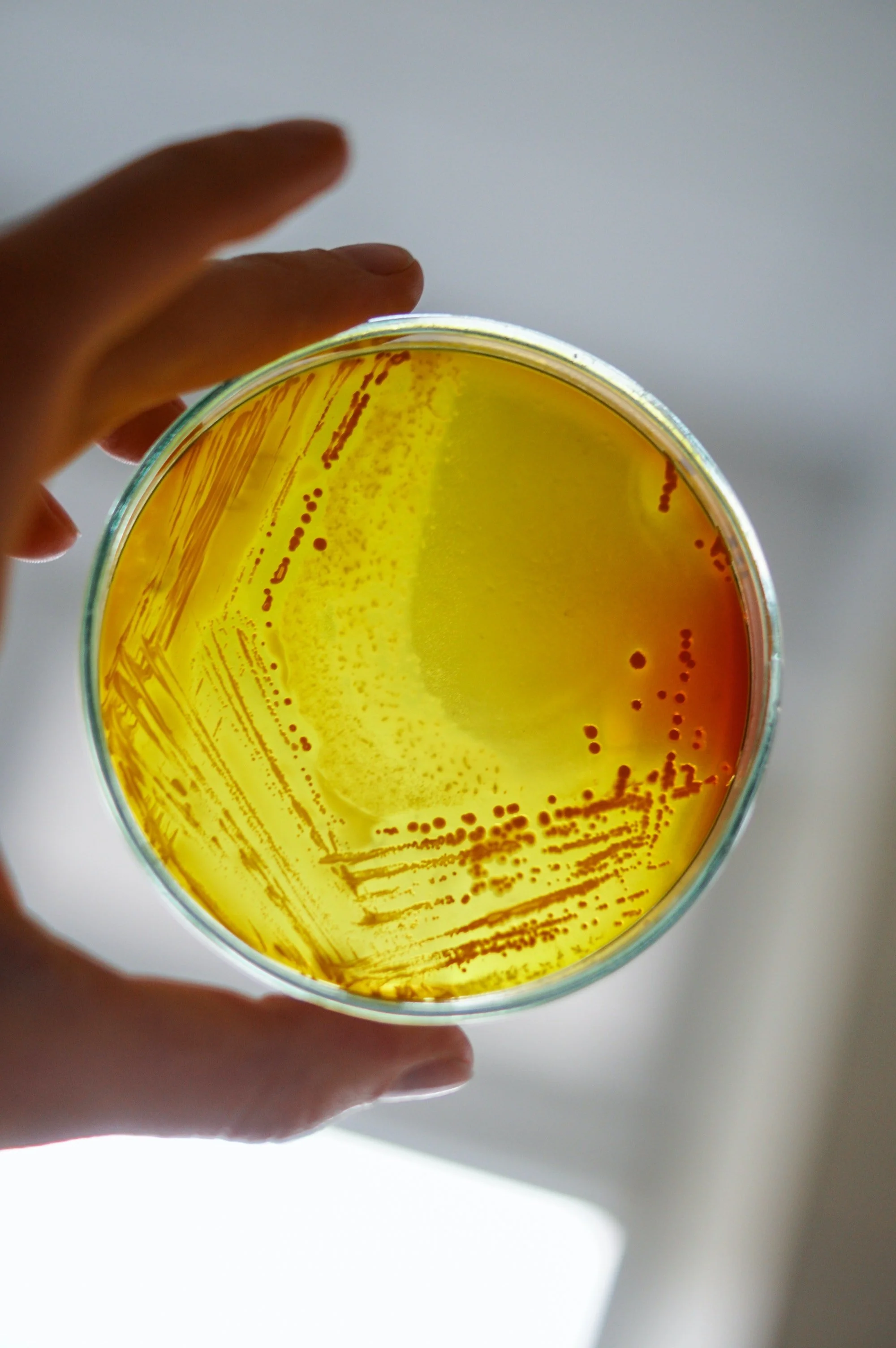
Gr-ADI Project
Project name: Gram‑Negative Antibiotic Discovery Innovator (Gr‑ADI) project: Nature-inspired discovery of novel anti-Klebsiella drugs
Unlocking the untapped chemical diversity of nature to discover new antibiotics against drug-resistant Klebsiella.
Funder: The Gr-ADI initiative is supported by the Novo Nordisk Foundation in close association with the Gates Foundation and Wellcome Trust
Budget: €3.3 million
Duration: 3 years (April 2026 – March 2029)
Partners: 8 partners from 5 countries
Coordinator: Flanders Institute for Biotechnology (VIB), Belgium
The overall goal of this project is to unlock the hitherto inaccessible chemical space of natural microbial ecosystems to discover novel lead antibiotics against multidrug-resistant Klebsiella pneumoniae. They are employing a strategy built on three pillars (Work Packages): (1) Ecology-inspired discovery and elicitation of novel chemistry; (2) Prioritisation of the most promising molecules with anti-Klebsiella activity; (3) Structural identification and early in vitro preclinical studies of novel lead antibiotics.
The Challenge
A growing threat. A need for new antibiotics.
Klebsiella pneumoniae is a major antibiotic-resistant pathogen, with existing treatment options becoming increasingly ineffective. Gr-ADI is addressing this challenge by looking beyond conventional approaches to antibiotic discovery. The project focuses on finding new molecules and mechanisms that could provide the basis for future treatments against multidrug-resistant Klebsiella. K. pneumoniae as a WHO priority pathogen, highlighting the urgent need for antibiotics with new mechanisms of action.
Scientific Concept
Nature holds untapped solutions
The project is taking a nature-inspired, ecology-driven approach to antibiotic discovery. Rather than relying solely on conventional screening methods, the team is exploring microbial communities from marine, plant-associated and human-associated environments to uncover biosynthetic pathways and natural products that may otherwise remain hidden.
Explore: Microbiomes from marine, plant-associated and human-associated environments
Unlock: Identify previously inaccessible biosynthetic potential
Screen: Find compounds with activity against Klebsiella
Prioritise: Assess chemical novelty, activity, expression and pharmaceutical potential
Characterise: Determine structures, mechanisms and activity against multidrug-resistant strains
Advance: Identify promising new antibiotic scaffolds and discovery strategies
THE C4D MEMBERS
Different disciplines. Different environments. One connected discovery effort.
Joleen Masschelein, VIB, Leuven, Belgium (Coordinator)
Paul Jensen, University of California San Diego (UCSD), USA
Lone Gram, Technical University of Denmark (DTU), Copenhagen, Denmark
Gilles van Wezel, Leiden University, Netherlands
Jos Raaijmakers, NIOO‑KNAW, Wageningen, Netherlands
Bart Keijser, TNO, Leiden, Netherlands
Olga Genilloud, Fundación MEDINA, Granada, Spain
Nigel Mouncey, Joint Genome Institute (JGI), Berkeley, USA
The project brings together complementary expertise across natural product chemistry, microbiology, genomics, and drug screening with a strong track record in collaborative research and is uniquely positioned to generate new scaffolds and validate hit compounds. All tools, strains, compound libraries, plasmids, elicitors, and high-throughput platforms will be shared openly with the Gr-ADI community and beyond, to maximise synergy and accelerate collective progress toward urgently needed antibiotics.
The C4D team is combining:
Culture-independent compound sourcing: Accessing chemical diversity that may not be captured through conventional cultivation and screening.
Ecology-inspired discovery: Using ecological insights to identify conditions and interactions that can trigger antibiotic production.
High-throughput microfluidics: Screening and analysing large numbers of microbial and chemical possibilities.
Advanced chemical and biological profiling: Prioritising promising compounds based on novelty, bioactivity, expression and early pharmaceutical characteristics.
Work Packages
-
Nature is full of microorganisms that produce useful chemicals to help them survive, grow, and establish themselves in their environments. Many of these microorganisms have not yet been grown successfully in the lab, which means their potentially valuable chemicals remain undiscovered. In WP1, we will use our expertise in microbial ecology and natural products research to explore understudied environments and identify new microorganisms and the compounds they produce. This approach will allow us to discover new chemicals that would likely be missed by traditional screening methods.
-
WP2 acts as a filtering and selection stage between finding promising compounds (WP1) and testing them in detail (WP3). It focuses on microorganisms and compounds that show activity against drug-resistant Klebsiella bacteria. The goal is to identify the most promising candidates and decide which ones are worth investing more time and resources in. We will prioritise compounds that are new, effective, produced in sufficient amounts, and can be scaled up for further development. The best candidates will then move to WP3, where they will be tested against a wider range of drug-resistant Klebsiella strains to evaluate their potential as future treatments.
-
WP3 focuses on testing collections of microbial extracts and compounds to find those that can kill or stop the growth of drug-resistant Klebsiella bacteria. Promising compounds will then undergo more detailed testing against a wider range of resistant bacteria to identify the best candidates for future drug development. We will also determine the exact chemical structure of these compounds to confirm that they are truly new discoveries. Throughout the process, a series of tests will be used to help decide which candidates should move forward and to quickly eliminate any compounds that are toxic or unsuitable as potential medicines.
Expected Results
New antibiotic scaffolds: Discovering chemical structures with potential against resistant Klebsiella.
New mechanisms of action: Understanding how previously unknown compounds affect the pathogen.
New discovery strategies: Developing approaches that can reveal antibiotic potential missed by conventional screening.
Deeper understanding of nature: Identifying ecological triggers that drive antibiotic production.